 Sunnyvale, CA

Clear Braces vs Invisalign: Which Orthodontic Option Is Right?
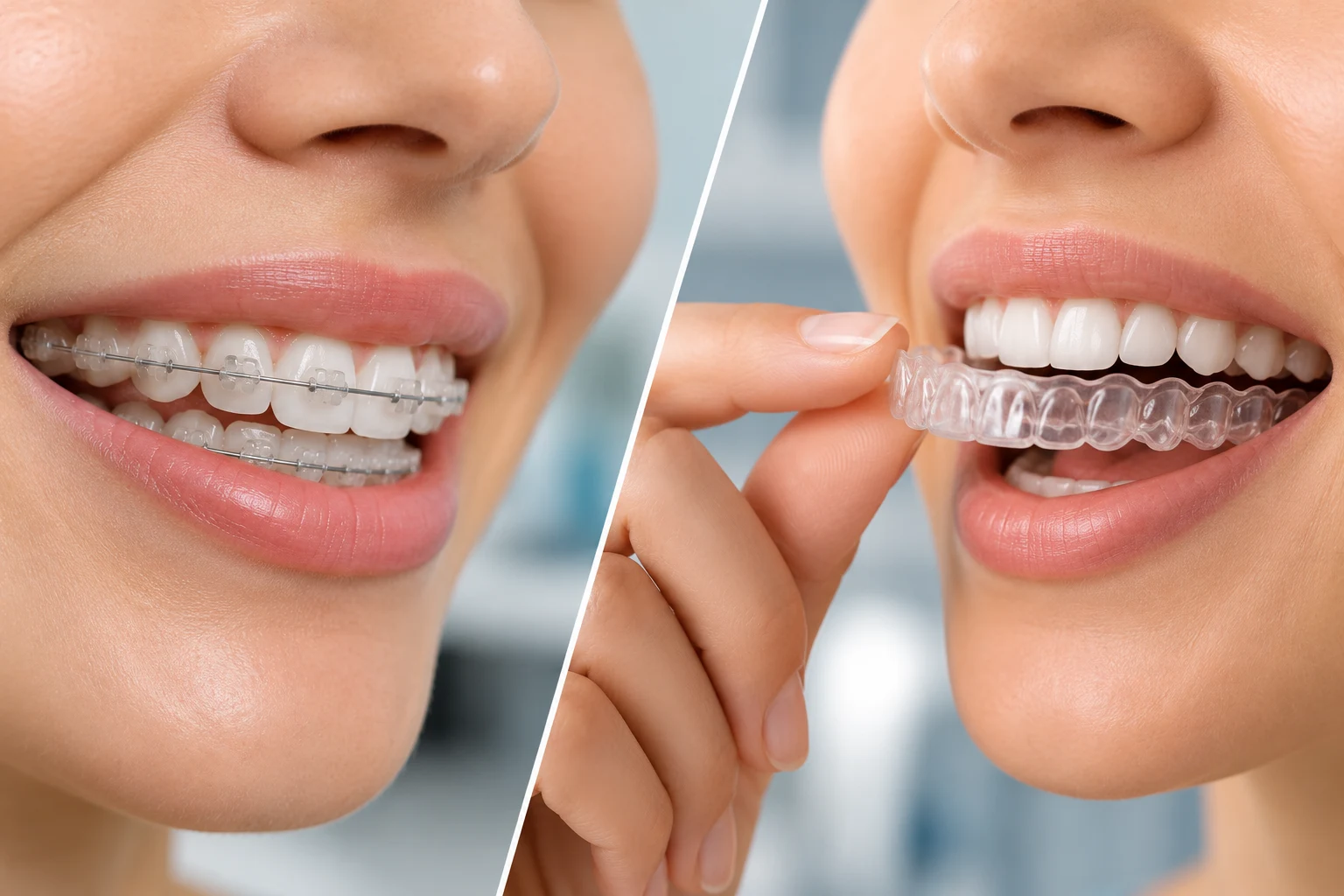
Deciding to straighten your teeth is an exciting investment in your health, confidence, and long-term well-being. However, navigating modern orthodontic options can sometimes feel overwhelming. Many adults and teens want to avoid traditional silver metal brackets in favor of subtle, discreet options that fit seamlessly into professional and personal routines.
Two of the most popular choices today are ceramic clear braces and clear aligner systems like Invisalign. While both treatments aim to correct crowded teeth, close gaps, and align your bite, they function differently in everyday life. Understanding the core differences when comparing clear braces vs invisalign helps you choose a path that suits your unique lifestyle, aesthetic goals, and orthodontic needs.
Here is a practical guide to help you compare clear braces vs invisalign so you can make a confident decision for your smile journey.
Understanding the Fundamental Differences: Clear Braces vs Invisalign
To choose the right option, it helps to understand how each treatment approach moves your teeth into proper alignment over time.
What Are Clear Ceramic Braces?
Clear ceramic braces function similarly to traditional metal braces, but they use tooth-colored or translucent ceramic brackets instead of noticeable silver ones. These brackets are fixed directly onto the front surface of your teeth and connected by a thin archwire.
Because the brackets blend naturally with your tooth enamel, clear ceramic braces are far less noticeable from a distance than standard metal bracket systems. However, because they are fixed in place, they remain attached to your teeth 24 hours a day throughout the entire duration of your treatment.
What Is Invisalign Clear Aligner Therapy?
Invisalign takes a completely different approach by replacing fixed brackets and wires with a sequence of custom-molded, removable plastic aligner trays. Crafted from smooth, BPA-free plastic, these transparent trays fit snugly over your teeth like a thin, nearly invisible guard.
Every one to two weeks, you switch to a new set of clear aligners in the prescribed sequence. Each tray applies gentle, continuous pressure to guide targeted teeth into updated positions without using fixed hardware or tight archwires.
Comparing Daily Lifestyle, Maintenance, and Aesthetic Appeal
Evaluating clear braces vs invisalign requires looking closely at how each treatment fits into your everyday routine, eating habits, and daily oral hygiene.
Appearance and Visibility
When it comes to subtle aesthetics, both options perform well, but they achieve subtlety differently:
- Clear Braces: The ceramic brackets match your natural tooth shade, but the thin wire running across your teeth is still visible up close. Small clear elastic bands are also used, which can occasionally absorb colors from dark foods or coffee over time.
- Invisalign Aligners: The thin plastic material is virtually invisible when worn. Most people will not notice you are undergoing orthodontic treatment unless you mention it.
Removability and Dietary Freedom
Dietary flexibility is one of the clearest dividing lines between these two choices:
- Clear Braces: Because clear ceramic brackets are bonded to your teeth, you need to avoid hard, sticky, or chewy foods that could dislodge a bracket or snap a wire.
- Invisalign Aligners: Because you remove your aligners before eating or drinking anything other than plain water, you can continue enjoying all your favorite foods without restriction.
Oral Hygiene and Daily Maintenance
Keeping your teeth clean during orthodontic care is vital for preventing plaque buildup and surface discoloration:
- Clear Braces: Cleaning requires weaving dental floss under archwires using floss threaders or water flossing devices, which takes extra time and attention each evening.
- Invisalign Aligners: Maintaining clean teeth remains simple. You pop your aligners out, brush and floss normally, rinse your aligner trays, and reinsert them.
Comparing Treatment Effectiveness and Compliance Requirements
Both systems produce reliable, beautiful results, but their success depends on different clinical and personal factors.
Severity of Bite Misalignment
Fixed ceramic braces offer precise, continuous control over complex tooth movements. They are frequently recommended for severe overcrowding, significant bite misalignments, or rotated teeth that require multidirectional force.
Invisalign excels at correcting mild to moderate crowding, spacing issues, and standard bite adjustments. Advanced digital planning allows clinicians to track complex movements, though some intricate root movements may still benefit from fixed bracket guidance.
Self-Discipline and Daily Wear Commitment
The removable nature of clear aligners brings freedom, but it also demands daily personal discipline:
- Invisalign Compliance: To achieve predictable results on schedule, aligners must be worn for 20 to 22 hours every single day. Leaving trays out for extended periods can stall tooth movement and extend your overall treatment timeline.
- Clear Braces Convenience: Because clear ceramic braces are permanently fixed to your teeth during treatment, compliance is automatic. You never have to worry about misplacing a tray or forgetting to put it back in after lunch.
Schedule Your Orthodontic Consultation at Akshar Family Dental
Choosing between clear braces vs invisalign comes down to your personal lifestyle, aesthetic preference, and unique dental alignment needs. Receiving a thorough clinical assessment from a dedicated care team is the best way to determine which option aligns with your goals. At Akshar Family Dental, we prioritize patient comfort, personal preference, and long-term oral health. Our team takes the time to walk you through your options, answer your questions, and design a customized treatment plan tailored specifically to you. Whether you choose fixed clear ceramic braces or flexible clear aligners, Akshar Family Dental is here to support your journey to a healthy, confident smile. Contact Akshar Family Dental today to schedule your consultation.
Frequently Asked Questions About Clear Braces and Invisalign
Q: Is treatment with clear braces vs invisalign faster?
A: Overall treatment times are often comparable for mild to moderate cases, typically ranging from 12 to 18 months. However, fixed clear braces may work faster for complex structural bite corrections, while Invisalign can be very efficient for straightforward alignment.
Q: Do clear ceramic braces stain easily?
A: The ceramic brackets themselves are stain-resistant and keep their color well. However, the clear elastic bands attached to the brackets can pick up stains from coffee, tea, mustard, or red wine. These elastic bands are replaced at your regular checkup appointments.
Q: Will wearing clear aligners or clear braces affect my speech?
A: You may experience a subtle, temporary lisp for the first few days with either option as your tongue adjusts to the new appliance. Normal speech typically returns quickly within a week.
Q: How often will I need checkup appointments during treatment?
A: For clear braces, checkups occur every four to six weeks for wire adjustments. For Invisalign, progress visits are usually scheduled every six to eight weeks to evaluate progress and collect your next aligner sets.
Q: How do I choose between clear braces vs invisalign for my teenager?
A: Consider your teen's daily habits. If they are prone to losing items or might struggle to wear aligners 22 hours a day, fixed clear braces provide automatic compliance. If they are highly responsible and prioritize discreet aesthetics, Invisalign can be an excellent fit.


Office Hours
Mon, Tues, Wed, &
Thurs, Sat, & Sun: Closed


Akshar Family Dental provides compassionate, high-quality dental care focused on creating healthy, confident smiles for patients of all ages.


© 2026 Akshar Family Dental | All Rights Reserved | Privacy Policy | Digital Marketing by Remedo