 Sunnyvale, CA
Root Canal vs. Tooth Extraction: How to Decide
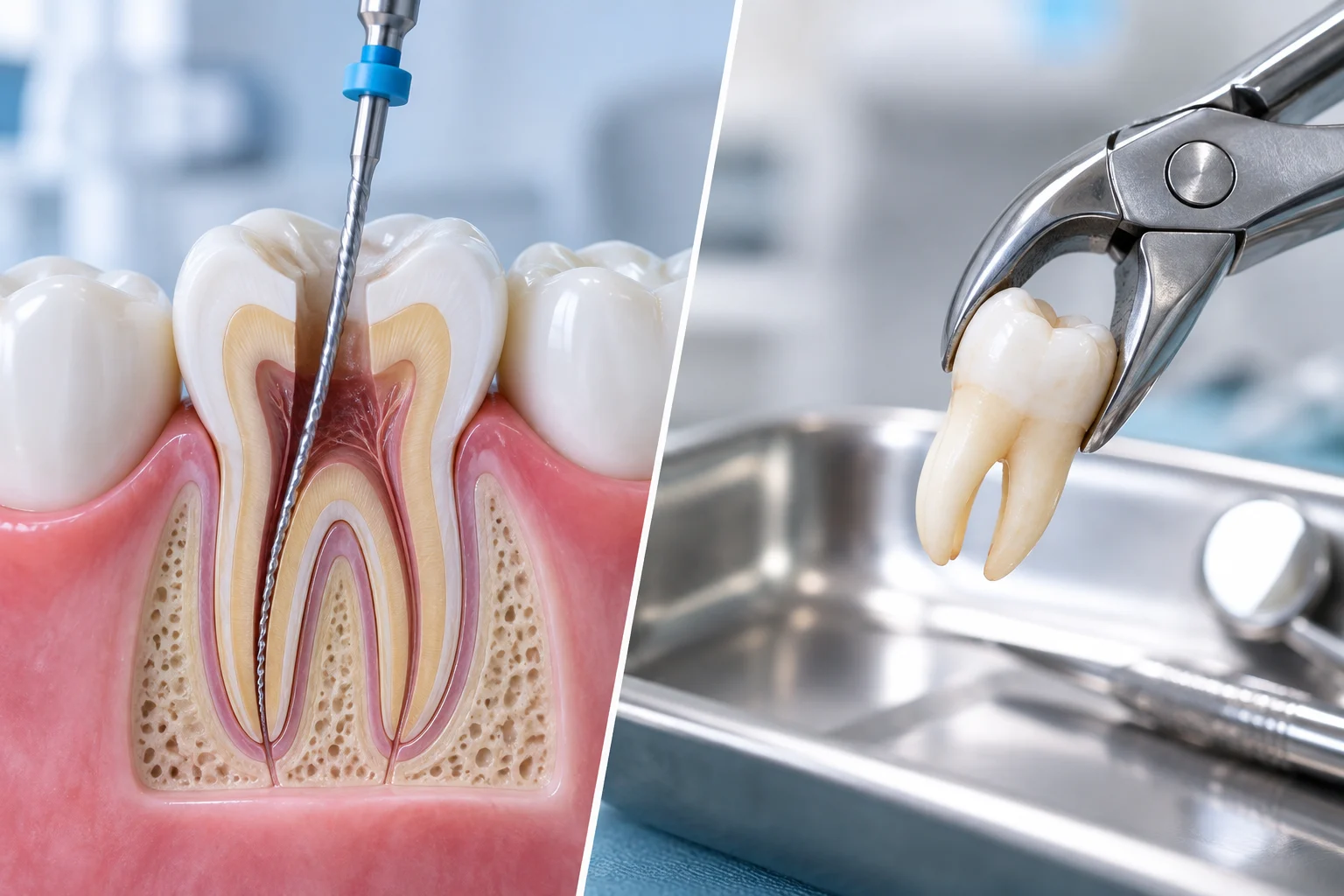
Finding out you need either a root canal or an extraction is one of those moments that can throw off your whole week. Neither option sounds particularly fun, and it is easy to get stuck wondering which one is actually the better call for your situation. The truth is, this decision usually comes down to a handful of factors specific to your tooth, not a blanket rule that applies to everyone. Understanding how root canal vs tooth extraction decisions typically get made can make the whole thing feel a lot less overwhelming.
Both options solve the same basic problem, which is dealing with a tooth that is infected, badly damaged, or causing pain. Where they differ is in the outcome. One saves the natural tooth. The other removes it. That single difference shapes almost everything else about recovery, cost, and what happens to your smile down the road.
What Is the Real Difference Between a Root Canal and an Extraction
A root canal is a procedure aimed at saving a tooth that has become infected or severely decayed on the inside. The dentist removes the damaged pulp tissue from within the tooth, cleans out the space, and seals it, usually followed by a crown to protect what is left of the natural structure. The tooth stays in your mouth and continues functioning much as it did before.
An extraction, on the other hand, means removing the tooth entirely. This is typically considered when a tooth is too damaged to reasonably save, when infection has progressed too far, or in certain cases involving overcrowding or impacted teeth. Once a tooth is extracted, replacement options like an implant, bridge, or partial denture usually come into the conversation if that tooth played an important role in your bite.
When Dentists Usually Recommend Saving the Tooth With a Root Canal
Dentists generally lean toward saving a natural tooth whenever it is realistically possible, and there is a good reason for that. Natural teeth tend to function better long-term than most replacement options, and keeping the tooth in place also helps maintain the surrounding bone structure.
A root canal tends to be the recommended path when the tooth structure above the gum line is still solid enough to support a crown afterward, when the infection has not spread too far into the surrounding bone, and when there is enough healthy tooth left to work with. In these situations, tooth extraction vs root canal comparisons usually favor the root canal, since it addresses the problem while preserving the tooth itself.
When Extraction Becomes the More Practical Option
Sometimes saving a tooth is just not realistic, no matter how much a patient might prefer that outcome. Extraction tends to come into play when a tooth has fractured below the gum line, when decay has destroyed too much of the structure to support a crown, or when the surrounding bone has been significantly compromised by advanced infection or gum disease.
Extraction is also more common in cases involving wisdom teeth that are impacted, or teeth that are crowding the rest of the mouth in a way that affects orthodontic treatment. In these scenarios, extracting a tooth vs root canal comparisons usually tilt toward extraction, since attempting to save a tooth that cannot reasonably support long-term function may not serve the patient well in the end.
Comparing Recovery Between the Two Procedures
Recovery experiences differ somewhat between the two, though neither is generally considered a major ordeal for most patients. After a root canal, mild soreness around the treated tooth is common for a few days, and over-the-counter pain relief usually keeps things manageable. Many patients are back to normal activities within a day.
Extraction recovery can involve a bit more initial discomfort and some swelling, particularly with more complex extractions like impacted wisdom teeth. Soft foods and rest are typically recommended for the first day or two, and most people feel noticeably better within a week. Simple extractions tend to have a shorter recovery window than surgical ones.
What the Cost Difference Usually Looks Like
Cost is often a major part of the decision, and this is where things can get a little more complicated. On the surface, extraction alone frequently costs less upfront than a root canal followed by a crown. But the full picture matters here, since an extracted tooth often needs to be replaced to maintain proper chewing function and prevent shifting of nearby teeth.
When you factor in the cost of an implant, bridge, or partial denture down the line, the total cost of tooth extraction vs root canal treatment can end up fairly comparable, sometimes even favoring the root canal route once replacement costs are considered. This is worth discussing openly with your dentist, since your specific insurance coverage and treatment needs will affect the numbers quite a bit.
Questions Worth Asking Before You Decide
Before settling on a direction, it can help to ask your dentist a few specific questions. How much healthy tooth structure is actually left to work with? What are the odds the root canal will be successful long-term for this particular tooth? If extraction is chosen, what replacement options make sense, and what would that add to the overall cost and timeline?
These questions help turn an abstract root canal vs tooth extraction decision into something concrete and specific to your situation, rather than a generic comparison that may not apply to your case.
Talk to Akshar Family Dental About Your Options
Deciding between saving a tooth and removing it is not something you have to figure out alone. Akshar Family Dental can evaluate your specific tooth, walk you through what a root canal or extraction would realistically involve, and help you choose the option that fits your long-term oral health goals. Reach out to Akshar Family Dental today to schedule a consultation and get clarity on the best path forward for your smile.
Frequently Asked Questions
Q: Is a root canal always better than an extraction?
A: Not necessarily. A root canal is often preferred when enough healthy tooth structure remains, but extraction can be the more practical choice when a tooth is too damaged or compromised to reasonably save.
Q: Does a root canal hurt more than an extraction?
A: Both procedures are performed with local anesthesia, so discomfort during treatment is typically minimal. Recovery discomfort afterward varies by patient and by the complexity of the specific case.
Q: Which option is cheaper, root canal treatment vs tooth extraction?
A: Extraction alone often costs less upfront, but replacing the extracted tooth can add high cost over time. Comparing total long-term costs is usually more useful than comparing the initial procedure price alone.
Q: Can I wait a while before deciding between extraction and a root canal?
A: Waiting too long can sometimes reduce your options, since ongoing infection or decay may worsen the situation. It is generally best to make this decision fairly soon after diagnosis.
Q: What happens if I choose extraction and do not replace the tooth?
A: Neighboring teeth can gradually shift into the empty space, and chewing function on that side may be affected. Most dentists recommend discussing replacement options even if you plan to wait before moving forward.
Q: How do I know if my tooth is a good candidate for a root canal?
A: This depends on factors like how much healthy structure remains, how far any infection has spread, and the overall condition of the surrounding bone. A dental exam and X-rays are the most reliable way to find out.


Office Hours
Mon, Tues, Wed, &
Thurs, Sat, & Sun: Closed


Akshar Family Dental provides compassionate, high-quality dental care focused on creating healthy, confident smiles for patients of all ages.


© 2026 Akshar Family Dental | All Rights Reserved | Privacy Policy | Digital Marketing by Remedo