 Sunnyvale, CA

Dental Bridge vs Implant: Which Is Right for You?
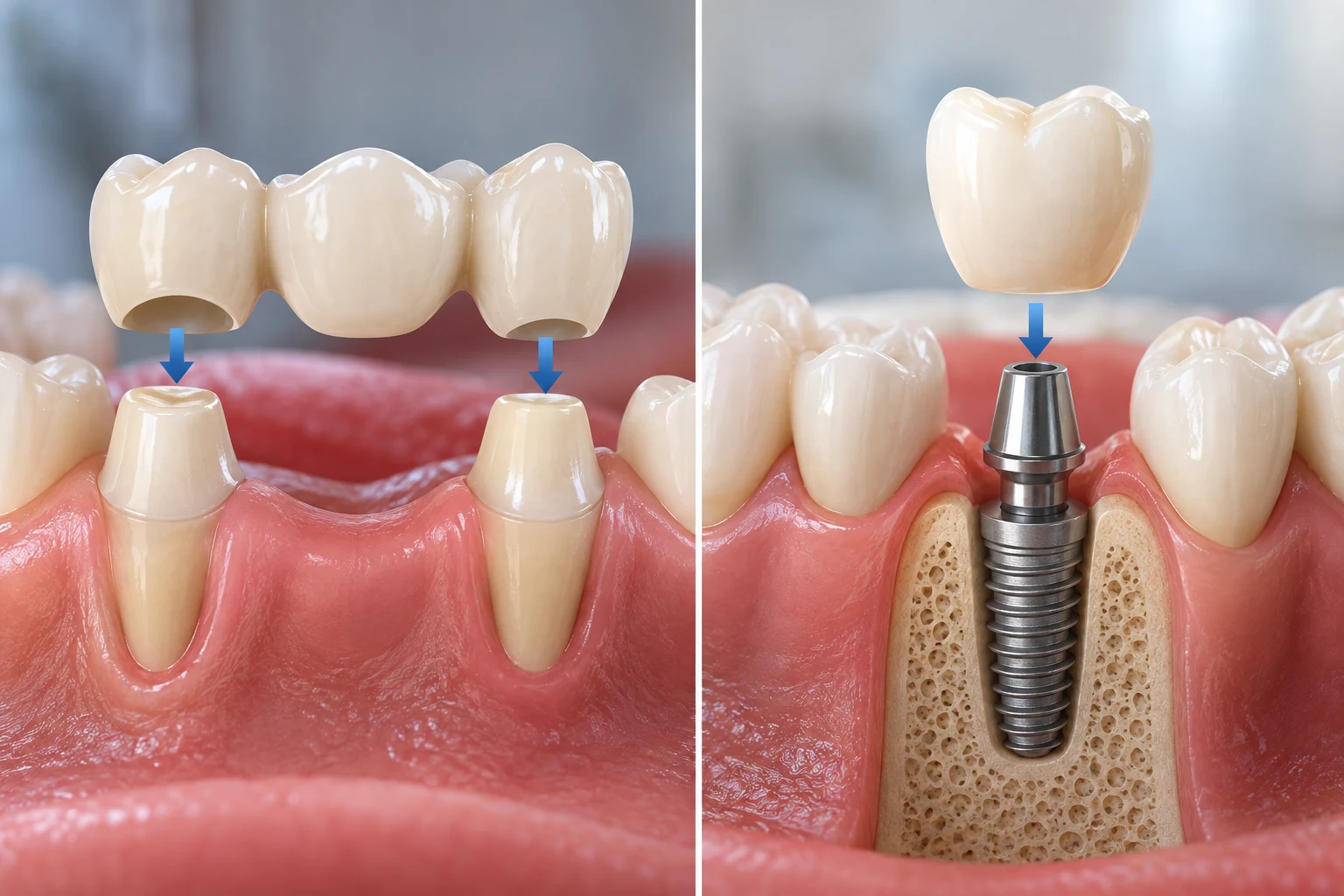
Losing a tooth can impact far more than just the appearance of your smile. It can change how you chew your favorite foods, affect your speech clarity, and even lead to subtle shifts in your jawbone and remaining natural teeth over time. When faced with a missing tooth, finding a reliable, comfortable tooth replacement option becomes a top priority for restoring long-term health and confidence.
Two of the most popular and time-tested treatments for tooth restoration are dental bridges and dental implants. While both options fill gaps and recreate a functional, natural-looking smile, they work in fundamentally different ways. Deciding between a dental bridge vs implant involves evaluating several key factors, including your bone density, general health, budget, and personal treatment timeline.
Here is an in-depth guide to help you understand the core differences between a dental bridge vs implant so you can make an informed decision for your oral health.
Not sure the tooth is beyond saving? Our guide to root canal vs. tooth extraction is worth reading first.
Understanding the Structural Differences: Dental Bridge vs Implant
To determine which restoration best fits your lifestyle, it helps to understand how each treatment replaces missing teeth behind the scenes.
What Is a Dental Bridge?
A traditional dental bridge is a fixed prosthetic device that bridges the gap created by one or more missing teeth. It consists of two main components: artificial replacement teeth, known as pontics, held in place by dental crowns anchored onto the adjacent healthy teeth.
To place a traditional bridge, your clinician must reshape and prepare the neighboring natural teeth by removing a small amount of enamel. These reshaped teeth, called abutment teeth, act as structural anchors supporting the custom pontic suspended between them.
What Is a Dental Implant?
Unlike a bridge, a dental implant acts as a standalone, artificial root replacement. It typically consists of a small titanium post surgically inserted into the jawbone beneath the gumline. Over a few months, a natural process called osseointegration occurs, where the titanium post integrates with your bone tissue to form a solid, permanent foundation.
Once healed, an abutment connector is attached to the post, and a custom-crafted porcelain crown is placed on top. Because a dental implant stands entirely on its own, it does not rely on or alter neighboring teeth in any way.
Comparing Long-Term Benefits and Advantages
When evaluating a dental bridge vs implant, comparing their daily benefits can clarify which solution matches your personal goals.
Benefits of Dental Implants
- Preserves Natural Jawbone Structure: Because the titanium post sits directly within the jaw, it stimulates bone tissue just like a natural tooth root. This helps prevent jawbone resorption and preserves natural facial contours over time.
- Protects Adjacent Healthy Teeth: Dental implants require no reshaping or enamel removal on surrounding teeth, preserving their original structural integrity.
- Exceptional Durability and Longevity: With consistent daily brushing, flossing, and routine dental cleanings, dental implants can last for decades or even a lifetime.
- Natural Look and Function: Implants match the stability and biting strength of natural teeth, allowing you to eat a wide variety of foods with total confidence.
Benefits of Dental Bridges
- Quicker Treatment Timeline: Installing a traditional bridge usually takes only two to three weeks over two routine appointments, making it an ideal choice for patients wanting rapid results.
- Non-Surgical Procedure: Bridges do not require minor oral surgery or extensive bone integration periods, which appeals to individuals seeking a less invasive treatment path.
- Lower Upfront Investment: A dental bridge often carries a lower initial cost compared to a single dental implant, making it accessible for budget-conscious patients.
- Effective for Low Bone Density: If you have experienced bone loss in your jaw and prefer to avoid bone grafting procedures, a bridge can bridge the gap using surrounding teeth for support.
Important Considerations Before Choosing Your Tooth Restoration
While both options provide excellent functional and cosmetic results, several clinical factors influence which choice is safest and most effective for your mouth.
1. The Health of Neighboring Teeth
If the teeth adjacent to your gap already have large fillings, severe wear, or require crowns anyway, placing a dental bridge can address multiple concerns simultaneously. However, if neighboring teeth are completely healthy and untouched, choosing an implant avoids unnecessary enamel removal.
2. Jawbone Quality and Density
Because implants integrate directly into the jawbone, you need adequate bone volume to support the post securely. If a tooth has been missing for a long time, the underlying bone may have thinned. While bone grafting can build up bone density prior to implant surgery, a bridge remains a viable alternative if you prefer to bypass additional procedures.
3. Oral Hygiene and Maintenance Routines
Daily care routines differ slightly between a dental bridge vs implant. Cleaning around an implant is identical to caring for a natural tooth, involving standard daily brushing and routine flossing. A dental bridge, however, requires using specialized floss threaders or interdental brushes to sweep beneath the suspended pontic and keep gum tissue clean and healthy.
4. Overall Health and Healing Capacity
Surgical procedures require healthy tissue healing. Conditions such as uncontrolled diabetes, heavy tobacco use, or autoimmune disorders can influence how bone tissue integrates with titanium posts. Your dental clinician will carefully review your medical history to ensure your body can comfortably support your chosen path.
Schedule Your Tooth Replacement Consultation at Akshar Family Dental
If you are weighing the benefits of a dental bridge vs implant, receiving personalized guidance from an experienced care team is the best next step. At Akshar Family Dental, we understand that every smile is unique, and we take the time to evaluate your overall health, oral structure, and personal preferences before recommending a treatment plan. Whether you choose a custom dental bridge or a long-lasting dental implant, Akshar Family Dental is committed to restoring your smile with gentle, comprehensive care. Contact Akshar Family Dental today to schedule your consultation and take the first step toward a healthy, complete smile.
Frequently Asked Questions About Dental Bridges and Implants
Q: How long does a dental bridge vs implant last on average?
A: A high-quality dental bridge typically lasts between 7 and 15 years before needing replacement or maintenance. A well-maintained dental implant post can last a lifetime, with the top crown lasting 10 to 15 years depending on normal daily wear.
Q: Is getting a dental implant painful?
A: Dental implant surgery is performed under local anesthesia, so you should not feel pain during the procedure. Most patients report only mild tenderness for a few days afterward, which can be managed easily with recommended over-the-counter pain relievers and soft foods.
Q: Can a dental bridge be replaced with a dental implant later?
A: Yes, in many cases a dental bridge can be removed and replaced with a dental implant down the road. However, because bone density decreases over time under a bridge, a minor bone graft may be needed prior to placing the implant post.
Q: How do I decide between a dental bridge vs implant for a back molar?
A: Back molars endure significant biting pressure during chewing. While both restorations work well, implants are often preferred for back molars because they provide maximum stability and prevent localized jawbone loss.
Q: How do I keep my restoration clean every day?
A: For implants, brush twice daily with a soft-bristled toothbrush and floss naturally. For bridges, brush thoroughly and use a floss threader or water flosser daily to remove plaque from beneath the artificial bridge tooth.


Office Hours
Mon, Tues, Wed, &
Thurs, Sat, & Sun: Closed


Akshar Family Dental provides compassionate, high-quality dental care focused on creating healthy, confident smiles for patients of all ages.


© 2026 Akshar Family Dental | All Rights Reserved | Privacy Policy | Digital Marketing by Remedo